Transport & Staging
Before the job even starts
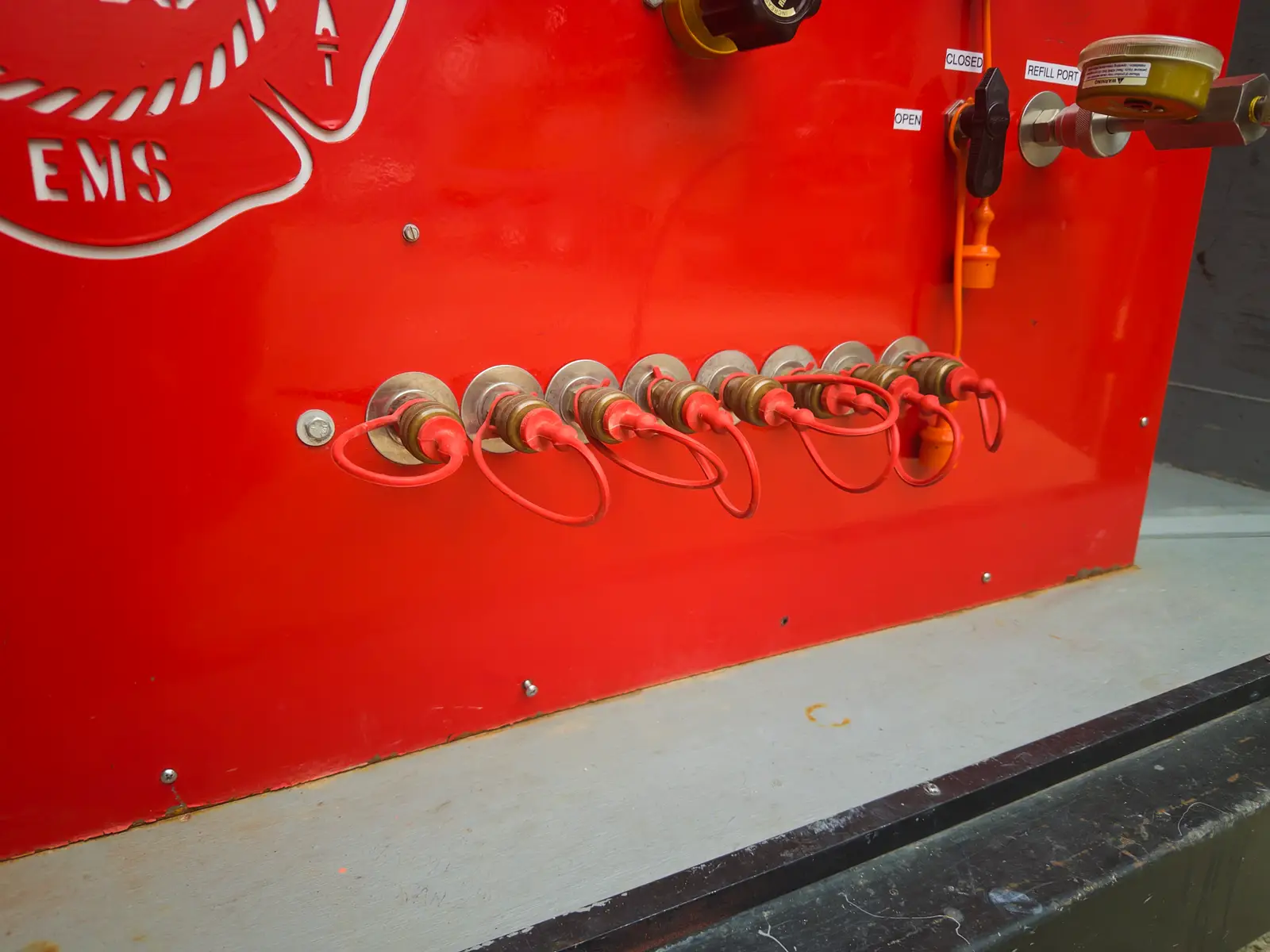
Legacy cascade setups introduce friction before crews hit the site. Weight, handling, and DOT rules all shape how fast the unit arrives and how cleanly it stages.
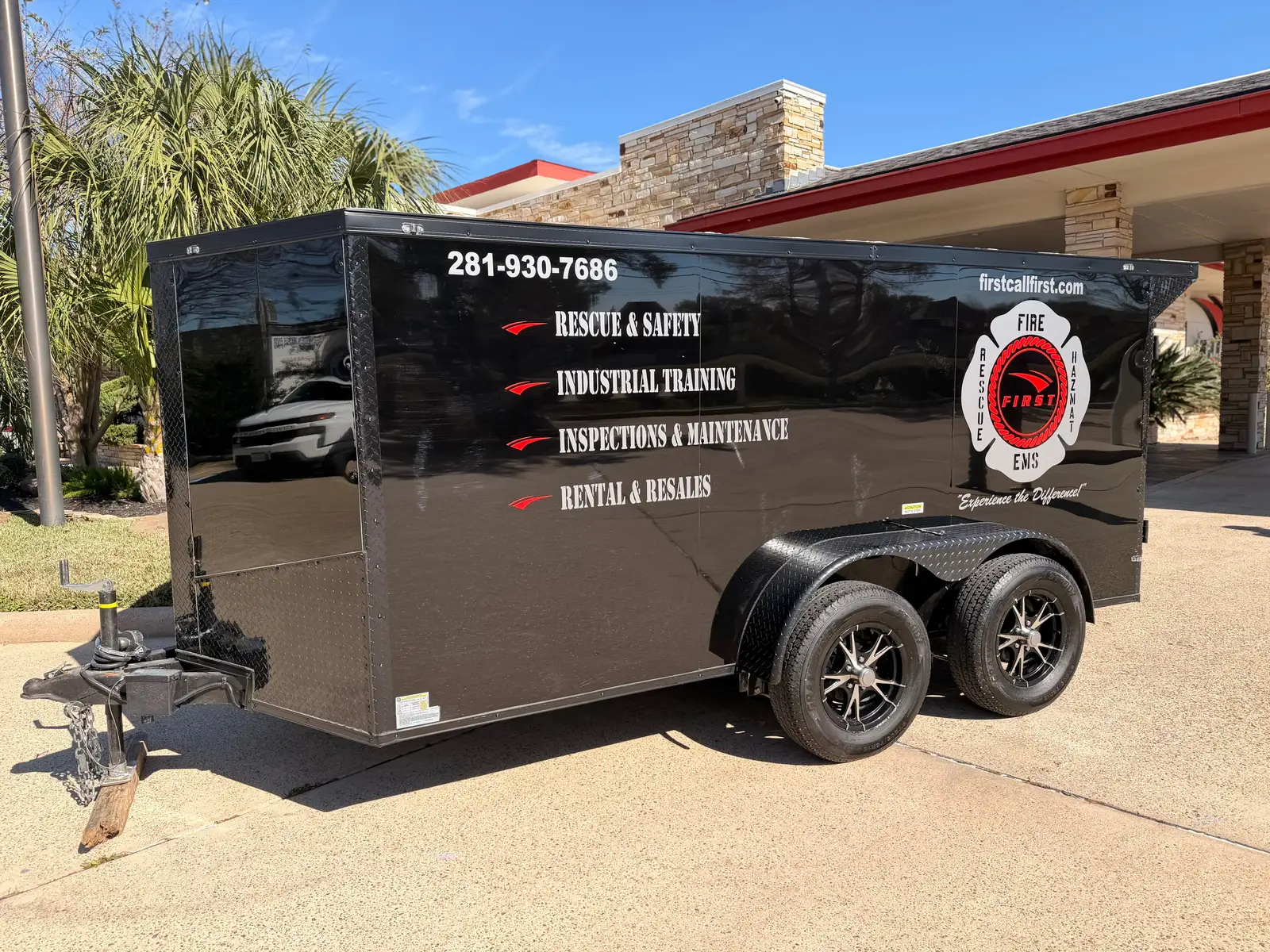
If you are choosing air supply for a turnaround, shutdown, or confined space operation, the real question is not just what delivers air. It is what reduces friction in transport, setup, monitoring, and swap timing once crews are already on the clock.
Two different tools for two different job profiles. Here is the fastest way to know which belongs on your next callout.
A standard cascade trailer can still work when the job is shorter, crew demand is lower, the setup is familiar, and remote visibility is not critical.
A breathing air trailer becomes the stronger option when uptime, deployment speed, and better awareness matter more than staying with legacy hardware.
BreatheFIRST is designed to improve the field reality, not just the spec sheet: more air, easier deployment, easier transport, and live telemetry through FIRSTPulse.
Practical differences between a standard cascade trailer and the BreatheFIRST breathing air trailer — the things that actually show up on a turnaround schedule.
| Factor | Standard Cascade Trailer | BreatheFIRST |
|---|---|---|
| Air Volume | Baseline cylinder capacity | Roughly 3× capacity for longer support windows |
| Transport Burden | Heavier steel-cylinder logistics, more DOT friction | Non-hazmat load profile that simplifies deployment |
| Setup | Manual, tool-dependent, training-memory heavy | 4-step tool-free deployment built for field use |
| Pressure Visibility | Primarily local gauges | Remote telemetry through FIRSTPulse |
| Alerts | Manual observation and reactive checks | Low-pressure alerts with local and remote visibility |
| Dispatch Timing | Often reactive after crews notice the drop | Earlier operational awareness for swap planning |
| Reporting | Limited built-in documentation trail | Compliance-ready reporting and logs |
| Best Use Case | Smaller or shorter jobs with familiar workflows | Turnarounds, shutdowns, remote operations, confined space support |
Legacy cascade setups introduce friction before crews hit the site. Weight, handling, and DOT rules all shape how fast the unit arrives and how cleanly it stages.
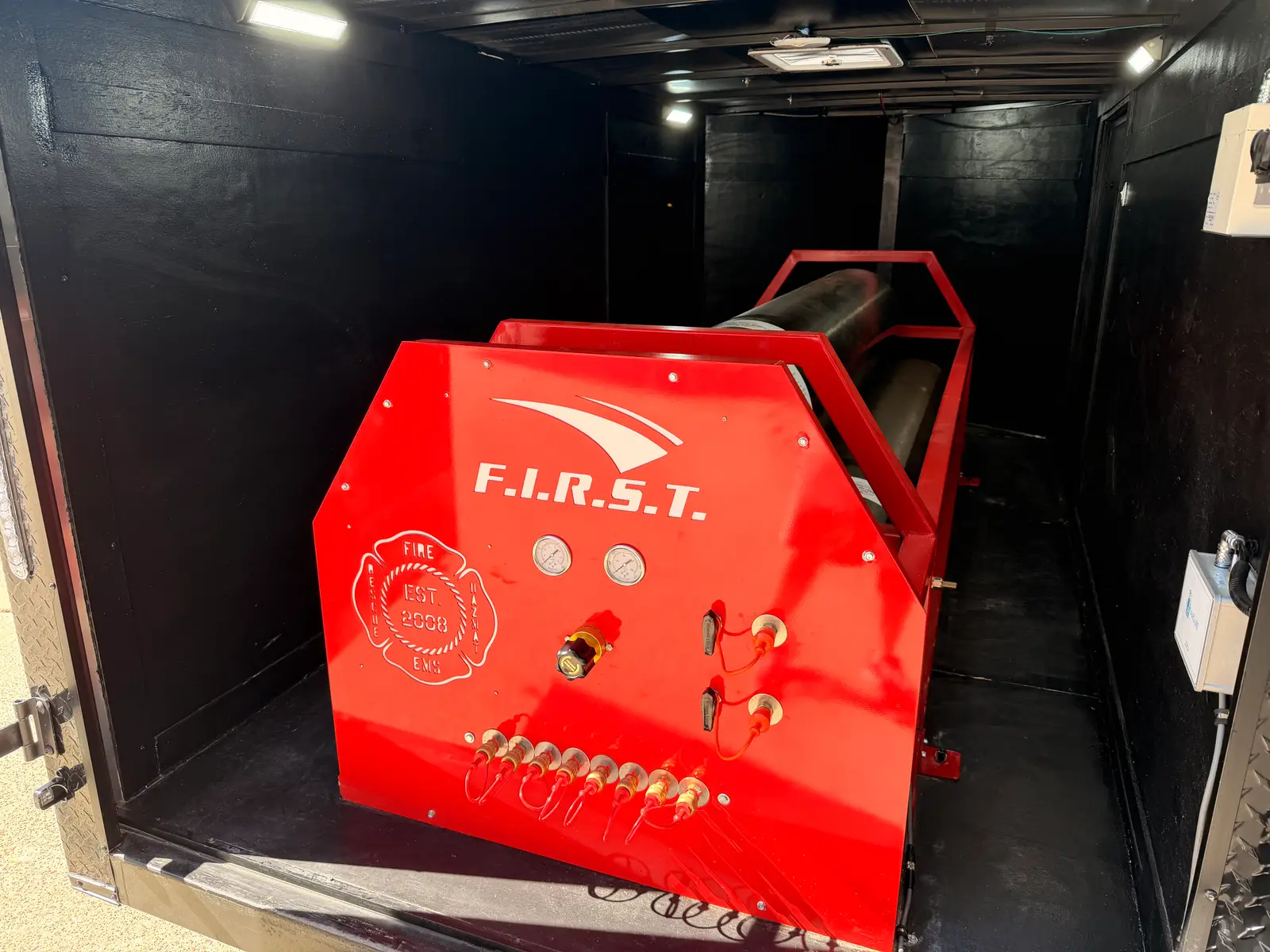
When the window is short, crews benefit from a trailer that deploys correctly without tools or perfect recall from a prior training session months ago.
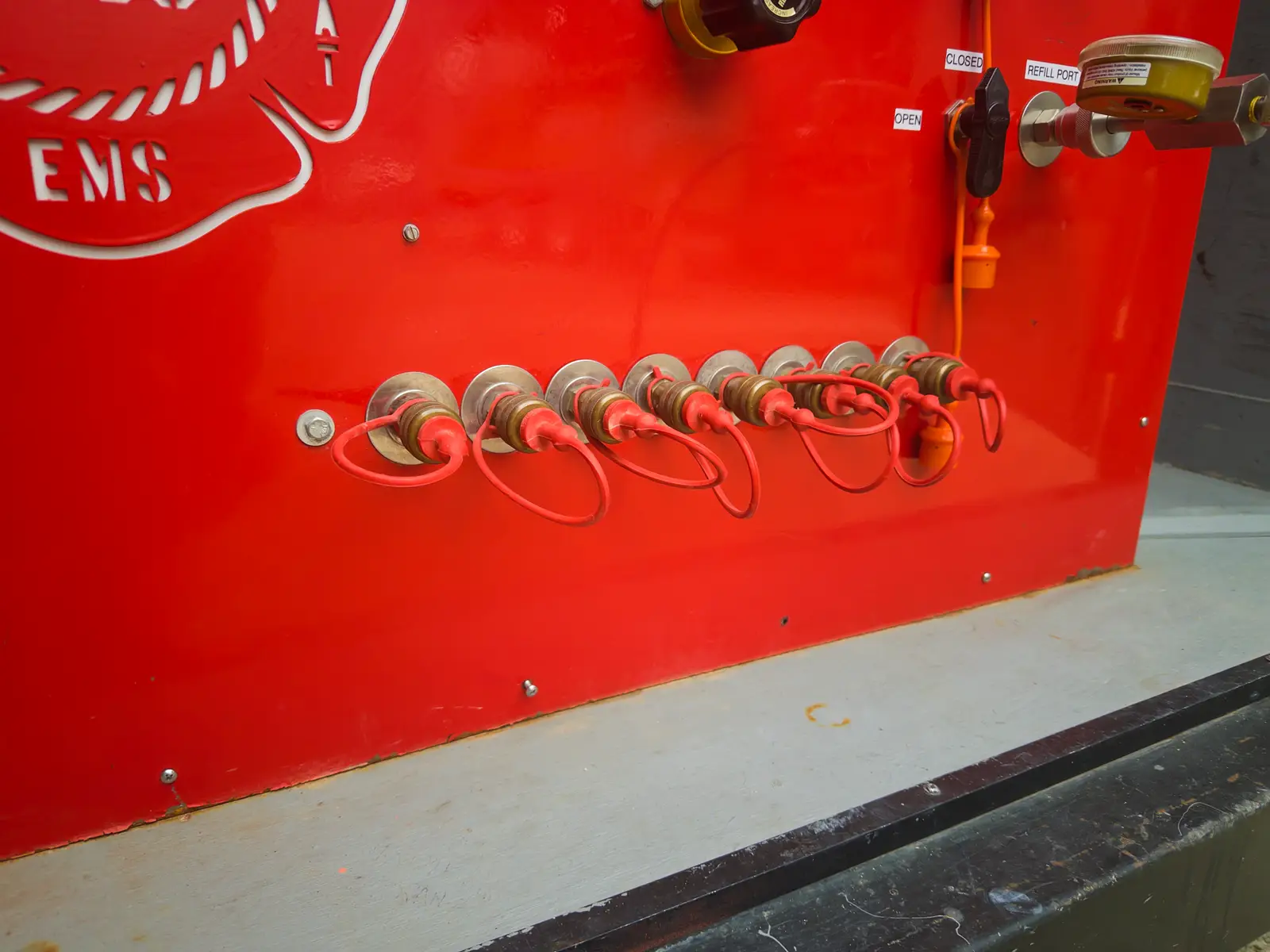
The gap between gauge-only awareness and connected monitoring is operationally significant. Visibility changes how early a team can respond to pressure decline and swap timing.
Two different answers — picked by job profile, not by preference.
If your team is evaluating a cascade trailer against a breathing air trailer for a turnaround, shutdown, remote support plan, or confined space operation, the fastest next step is to review the product page and talk through the deployment profile with F.I.R.S.T.